
Carthage Criminal History Checks
A Carthage criminal history check begins by defining the record. A police narrative describes what an officer reported. A booking sheet shows jail intake. A municipal or county docket records what a court did. Tennessee Open Records Information Services, also called TORIS or TN-FlexCheck, reports fingerprint-supported Tennessee arrest cycles and linked outcomes. No one source replaces the others. For a recent city event, the local police record is usually the first useful item. For a filed state charge, the Smith County Circuit Court Clerk is the better source.
Use a narrow sequence so namesakes and stale status entries do not lead the search off course:
- Call Carthage Police with the report number, date, location, and record type if known.
- Ask for the releasable incident or arrest report and confirm how inspection or copies are handled.
- Contact the Carthage city court for municipal docket material tied to a city citation.
- Ask the Smith County clerk about General Sessions or Circuit records when a state-law case was filed.
- Use TORIS only when a Tennessee-wide, fingerprint-supported history answers the question.
A very new event may not yet have reached every layer. Check the creating office first, then verify the outcome with the court that handled the charge.
Carthage Justice Records Hub
Carthage is both an incorporated town and the Smith County seat. That creates an unusual concentration of record offices without merging their custody. The Carthage Police Department and city court operate from 314 Spring Street. County criminal files, certified dispositions, jail records, and sheriff records are held at the Smith County Justice Center at 322 Justice Drive. A requester can be in the right town yet still ask the wrong office.
The U.S. Census decennial data source documents the incorporated-place counts used to rank Carthage as Smith County's largest city in 2020.
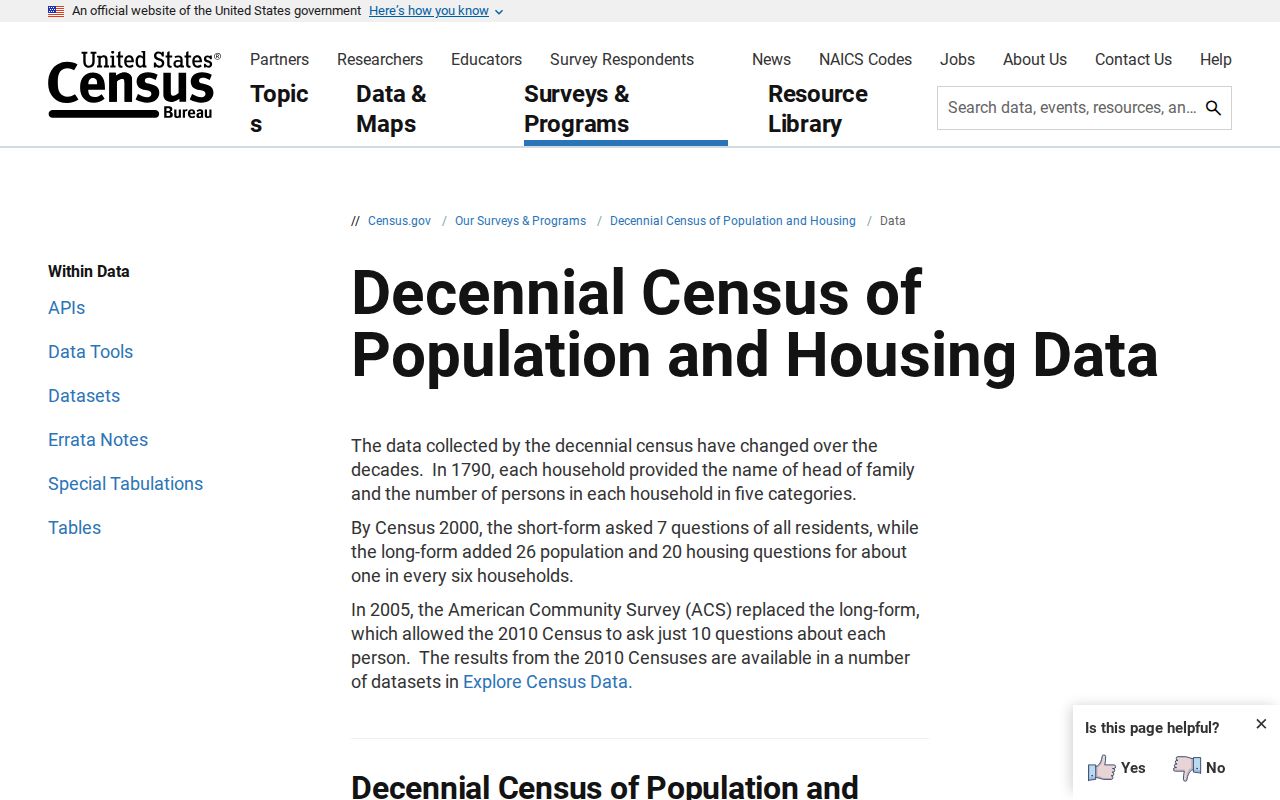
The population context helps explain why Carthage has a local records path and also hosts the county's main justice offices. It does not turn county records into town records.
Carthage Police and City Court
314 Spring Street
Carthage, TN 37030
615-735-2525
Weekdays, 8 a.m.-4 p.m.
Smith County Clerk Counter
322 Justice Drive, Suite 115
Carthage, TN 37030
615-735-0500
Weekdays, 8 a.m.-4 p.m.
Records at Carthage Police Department
Carthage Police is the custodian for reports its officers create. The department can be reached at 615-735-2525 or carthagepolice@townofcarthagetn.gov. Chief Brit Davis is the published department head. No verified public report-request portal or downloadable city police form was found, so direct contact is the practical route. Give the incident number when possible. If it is unknown, supply a tight date range, exact location, type of event, and the names needed to locate the file.
Ask for a defined record, such as an incident report, arrest report, citation, or releasable activity entry. Carthage has published monthly police activity in Board of Commissioners agenda packets. One April 2025 export listed incident number, reference number, primary offense code and description, an incident date, export time, and pages. That activity list is not proof of an arrest or conviction. It is a pointer that may help identify the report kept by the city.
Protected victim details, juvenile information, personal identifiers, and parts of an active investigation may be withheld or redacted. A focused request makes it easier for the custodian to identify public portions.
Carthage Police and Court Records
A common Carthage records error is asking the clerk for the officer's narrative or asking police for a certified judgment. The police report covers the reported facts, investigation, and enforcement action. A court file covers the complaint or citation, charge, hearings, plea, judgment, sentence, and costs. The Smith County clerk can certify its own court record. Carthage Police cannot certify what a county judge decided.
The city court layer is narrower. It handles matters within municipal jurisdiction and keeps the corresponding local docket. State misdemeanors and preliminary felony proceedings may appear in General Sessions. A felony can later proceed by indictment to Circuit/Criminal Court. When paperwork does not make the court clear, read the issuing agency, court name, case or citation number, and Tennessee Code reference before calling.
| Question | Best Carthage starting point | Next record layer |
|---|---|---|
| What did the officer report? | Carthage Police | City or county court if filed |
| What happened to the charge? | Named court clerk | Certified disposition if needed |
| Was the person booked locally? | Smith County sheriff or jail | Clerk for the filed case |
| Does Tennessee history show it? | TORIS | Originating court for detail |
Booking and Arrest Records in Carthage
A Carthage officer creates the incident and arrest paperwork, but county jail staff create the booking record after transport. The Smith County Jail and Sheriff's Department are at 322 Justice Drive, Suite 200, and use 615-735-2626. No verified public county booking log was found. Phone confirmation or a focused public-records request is therefore safer than an unofficial roster. Ask for the booking number, intake time, holding charge, bond or hold, and release or transfer status.
Booking charges reflect the intake stage. A prosecutor may file different counts, a grand jury may return an indictment or no true bill, and a judge may dismiss or resolve the case on other terms. The Smith County arrest search overview explains the county custody channels in more depth. Carthage Police remains the source for its narrative even after the person enters county custody.
For later felony custody or supervision, TDOC's FOIL system may show status, location, offense, sentence, parole information, and release data. It is not a live list of each new Carthage booking. VINE provides custody notifications, not a certified judgment.
Finding Carthage Case Records
No official public Carthage municipal case-name search was located. Call the city court at 615-735-2525 for a city matter. Judge Randy Wakefield and clerk Fay Cosby are identified in the official sources. For state-law cases, call the Smith County Circuit Court Clerk at 615-735-0500 with a name, approximate filing year, and case or citation number if known. Ask whether General Sessions or Circuit/Criminal Court holds the file.
The Tennessee court clerk listing for Fay Cosby provides an official city-court reference.
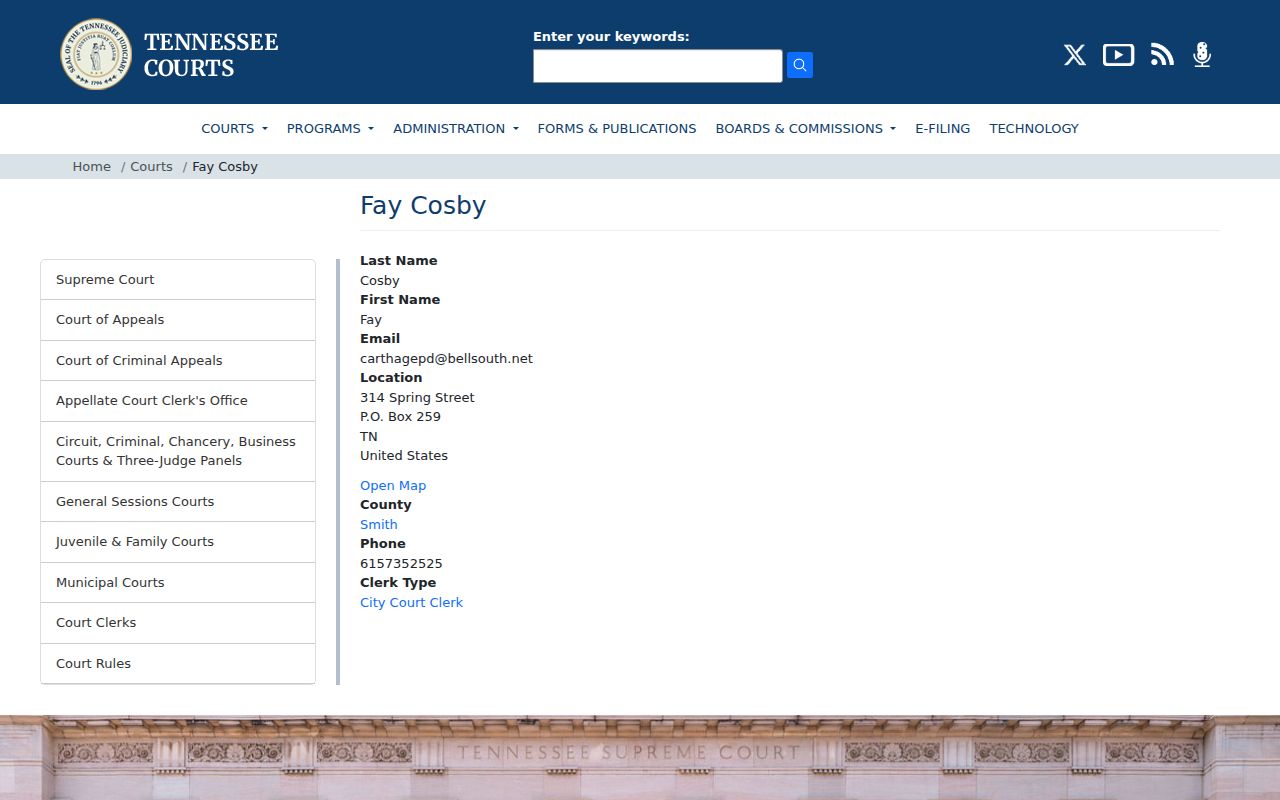
This clerk source helps identify the municipal contact, while the county clerk remains the source for General Sessions and Circuit files.
CourtFeePay is a payment route, not a public name-search database. It requires the user to select General Sessions or Circuit and enter a citation or case number. Use it only after the clerk has identified the case. Ask the proper clerk about inspection, plain copies, certified copies, and any fee because local copy charges were not published in the research.
The Carthage Municipal Court File
A Carthage municipal file ties a local citation or charge to court events. It may show the court, docket or citation number, filing date, party name, alleged violation, scheduled date, plea, disposition, fine, cost, and payment status when those fields apply. Availability and public display depend on the city court's records practice. Because no public name portal was verified, request the file through the city court and give the most precise identifier available.
| Court Name | Carthage City Court |
|---|---|
| Case Types Heard | Municipal matters, local citations, and matters within the court's lawful jurisdiction |
| Case Lookup Channel | City court phone or direct records inquiry; no verified public name portal |
| What the Docket Shows | Case or citation number, events, plea, outcome, amounts, and status when applicable |
| Copies & Fees | Ask the clerk; no official city copy schedule was located |
Do not treat an entry as a full Tennessee history. It answers what happened in that city matter. General Sessions or Circuit records must be requested from the county clerk, and a TORIS response is a separate state repository product.
Carthage Criminal Docket Timing
The county courthouse schedule is useful once a Carthage matter reaches Smith County court. General Sessions criminal court is set for Thursdays at 9 a.m., except fifth Thursdays. Traffic sessions are the first and third Tuesdays at 9 a.m. These recurring times are not a case search. Never infer that a named person has a hearing merely because a regular docket is underway.
Call the clerk before relying on the schedule. A specific case may be reset, transferred, disposed of, or assigned elsewhere. The clerk page also displays a separate “Come see us” address at 122 Turner High Circle, while both the detailed office listing and state courthouse directory support 322 Justice Drive for the court counter. Confirm the destination before travel.
The recovery court and misdemeanor probation office are also based at 322 Justice Drive. The official Smith County program page describes that local supervision setting.
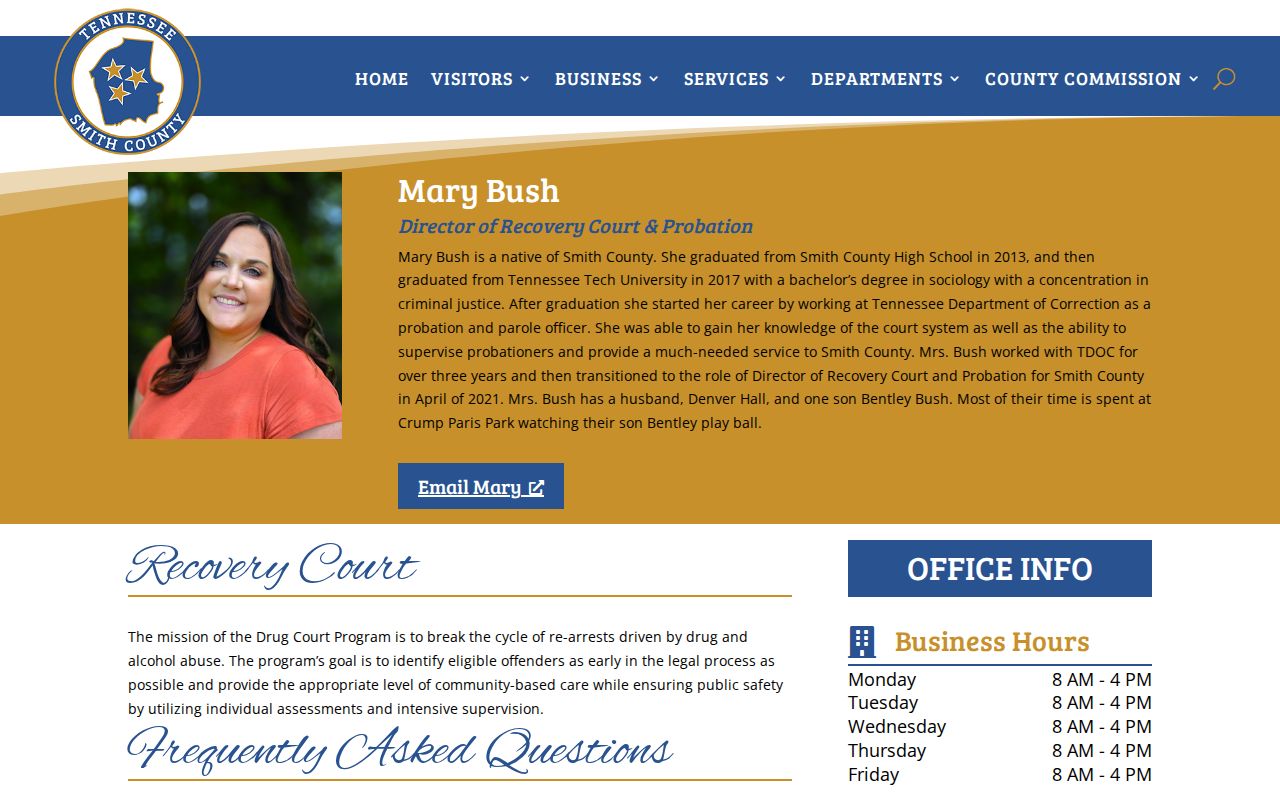
That program record is separate from the city police report and ordinary court docket, even though the offices sit in the same Carthage justice complex.
How Carthage Records Reach the County
A city event can create several Carthage records in sequence. Police first create the incident or arrest report. County jail staff create a booking file after intake. A city or county clerk opens a docket when a citation, warrant return, or charge reaches court. TBI receives a fingerprint arrest submission and later tries to link the reported disposition. Each stage has its own custodian and update time.
Record flow: Carthage Police Department › Smith County jail and courts › Tennessee Bureau of Investigation
This path explains why a fresh Carthage arrest may appear at the police or jail level before it appears in TORIS. It also explains why a court dismissal may not instantly update every copy of a booking record. When the outcome matters, get the court disposition. When the narrative matters, return to Carthage Police. When a broad Tennessee fingerprint-supported record is needed, use TORIS and verify each local entry against its originating court.
Aliases are not included in the TORIS name search, and ordinary juvenile data is omitted unless a case was transferred to adult criminal court. The $29 fee is nonrefundable, so accurate identifying data matters.
Carthage Record Custody Boundaries
Three offices at two Carthage addresses answer different questions. Police at 314 Spring Street hold city-created reports. The sheriff and jail in Suite 200 at 322 Justice Drive handle county custody and sheriff records. The Circuit Court Clerk in Suite 115 handles General Sessions and Circuit case files. A request sent to the wrong custodian can produce a valid “no record” even though another office has the item.
If no case number is known, start with the report or booking number. Those identifiers can help the clerk locate the later docket. If only a court case number is known, the clerk can explain the court file but may not have the full police narrative. Keep the request to one record class and a tight date range. Ask for releasable redacted portions if some content is exempt.
- Incident report
- The city officer's account of the reported event and investigation.
- Booking record
- The county jail intake record, including custody, charge-at-intake, and release fields.
- Disposition
- The court's final or current result for a charge.
- Rap sheet
- TBI's fingerprint-supported Tennessee arrest cycles and linked outcomes.
Correcting Carthage Criminal Records
If a Carthage record looks wrong, identify which layer contains the error. Ask Carthage Police about its report. Ask the city or county clerk about a docket or disposition. TBI has a fingerprint-based dispute process for confirmed repository inaccuracies. A mismatch between records is not always a clerical error. It may reflect charges changing between arrest and filing, a report lag, or a disposition that has not yet linked to the arrest cycle.
For a qualifying dismissal, acquittal, no true bill, nolle prosequi, or other eligible result, Tennessee directs the person back to the court where the matter began for expungement. Obtain the docket and each charge first. Keep certified copies of any order and charging paper. An expungement must then reach the relevant agencies, which may include police, jail, clerk, and TBI.
Do not assume that one corrected screen fixes every Carthage record at once. Confirm the city report, county court result, and state entry separately. The court order is the key proof when a final outcome must be reconciled across systems.
Carthage Record Access Rules
The Tennessee Public Records Act governs access to many state and local records, but exceptions still apply. Carthage may redact protected victim information, personal identifiers, juvenile content, or active-investigation details. Court access also follows Tennessee court rules, and sealed or expunged records leave ordinary public channels. Public does not mean every field must be released without review.
Key Statutes:
Tenn. Code Ann. § 10-7-503 establishes inspection access to public records subject to lawful exceptions.
Tenn. Code Ann. § 10-7-504 contains confidentiality rules that may require withholding or redaction.
Tenn. Code Ann. § 40-32-101 controls qualifying Tennessee expungement and removal from ordinary access.
Tennessee Supreme Court Rule 34 sets access policy for judicial records within its scope.
State whether inspection will meet the need before asking for copies. Include the report or case number, date, location, agency, and a clear description. When an office withholds part of a Carthage record, ask whether a redacted public copy can be provided and which rule supports the restriction.